
Centering Inclusion
We commit to maintain a vibrant community where diverse ideas, voices, and perspectives are shared and respected. We strive to create a culture where every member thrives, feels supported, and can bring their full selves to SC&I.

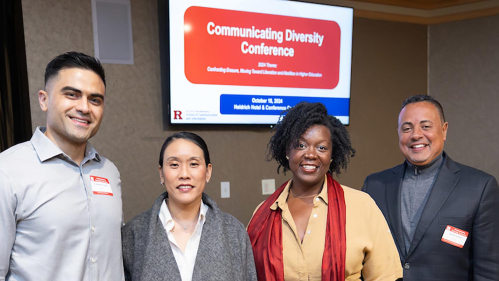
Inclusive Excellence
The School of Communication and Information (SC&I) is committed to inclusive excellence, fostering a community where diverse experiences, identities, and perspectives are explored through respectful dialogue and meaningful exchange. Grounded in civility, access, and opportunity for all, we create an environment where students, faculty, and staff are supported and empowered to contribute fully. Through this commitment, we cultivate a culture of belonging, inquiry, and impact that prepares members of our community to lead in a complex and evolving world.
Centering Inclusion
We commit to maintain a vibrant community where diverse ideas, voices, and perspectives are shared and respected. We strive to create a culture where every member thrives, feels supported, and can bring their full selves to SC&I.

Community Engagement
We commit to actively cultivate relationships with our external communities to broaden access and share knowledge. We want our work to help solve societal challenges and meaningfully improve the lives of people, communities, and organizations in New Jersey and beyond.

Continuous Improvement
We commit to support the academic and professional success of our students, faculty, and staff. We offer innovative opportunities for members of the community to utilize communication, information, and media perspectives to competently engage in our diverse and ever-evolving world.
By the Numbers
Doctoral degrees, research and scholarship, conferred to minority students across all disciplines
Social Mobility
Percentage of Rutgers-New Brunswick students from historically underserved communities
Most Diverse Colleges in America
Advancing Inclusive Excellence
The School of Communication and Information supports Rutgers’ vision to provide Opportunity for All. We advance inclusive excellence by embedding our commitments into our research, teaching, and workplace culture and cultivating intentional practices to support a thriving community at SC&I
We cultivate scholars and academic leaders who engage diverse perspectives and address complex societal challenges.
This looks like:
We create an environment where all students are supported, challenged, and prepared to thrive academically, professionally, and personally.
This looks like:
We support faculty in their teaching, research, and professional growth, recognizing their central role in advancing the school’s mission.
This looks like:
We foster a workplace where staff feel valued, supported, and empowered to contribute meaningfully to the school’s mission.
This looks like:
We build meaningful partnerships and share knowledge to expand access, strengthen communities, and contribute to positive societal change.
This looks like:


